Why Your Infant Drools Constantly at 4 Months: Teething Rash Prevention and Care
You’re changing your baby’s bib for the fifth time today, and their chin looks red and raw. I know that feeling of helplessness. Let me walk you through exactly why this happens and how to keep that delicate skin healthy.
Why does my 4-month-old suddenly drool so much, and how do I stop the painful rash that follows?
The Science Behind the Drool Tsunami

At around 3 to 4 months, your baby’s salivary glands mature dramatically. They begin producing 2 to 3 times more saliva than in the newborn period. This is completely normal.
Teething often begins around this age, even if you can’t see a tooth yet. The emerging tooth buds irritate the gums, which triggers even more saliva production. Your baby swallows less frequently than an older child, so the excess drool spills out.
Key takeaway: Drooling at 4 months is a normal developmental milestone, often the very first sign of teething activity beneath the gumline.
When Do Babies Actually Teeth?
The average age for the first tooth to erupt is 6 months. However, teething symptoms—including drooling, irritability, and gum swelling—can begin 2 to 3 months before the tooth breaks through. So a 4-month-old drooling is right on schedule.
Some babies are early teethers (3 months) and others are late (12 months). Both are normal ranges.
Teething Rash: What It Looks Like and Why It Happens

Teething rash (also called drool rash or perioral dermatitis) is a red, raised, sometimes bumpy rash on the chin, cheeks, neck, and chest. It occurs because:
- Saliva contains digestive enzymes that break down the skin’s protective barrier
- Constant wetness softens the skin, making it more vulnerable to irritation
- Friction from bibs, clothes, and your baby’s own hands rubs the skin raw
- Bacteria and yeast thrive in moist environments, worsening the rash
Important: Teething rash is not an allergic reaction. It is purely a contact irritation rash.
Teething Rash Prevention: A Step-by-Step Plan
You cannot stop the drool, but you can stop the rash. Here is your evidence-based action plan:
1. Keep the Skin Dry
- Change bibs the moment they feel damp — buy at least 10 soft, absorbent cotton bibs
- Gently pat dry the chin and neck throughout the day, especially after feeding
- Use a clean, soft cloth — never rub, as that increases friction
2. Create a Protective Barrier
- Apply a thin layer of petroleum jelly (Vaseline) or a zinc oxide diaper cream to the chin, cheeks, and neck before sleep and after drying
- Lanolin-based creams (like those used for breastfeeding nipples) are also safe and effective for babies over 3 months
- Avoid any cream with fragrances, dyes, or corticosteroids unless prescribed by a pediatrician
3. Choose the Right Fabrics
- Cotton bibs and clothing are breathable and absorbent
- Avoid synthetic or wool fabrics directly against the skin
- Use a cotton muslin cloth under the chin during playtime
4. Nighttime Care
- Apply a thick layer of barrier cream before bedtime
- Dress your baby in a cotton sleepsack with a bib that covers the chest
- Keep the room cool — sweating worsens drool rash
Soothing Baby Gum Pain Alongside Drool Rash
Your baby is likely uncomfortable from both the rash and the teething pain beneath. Here is how to address both:
Safe Teething Remedies for 4-Month-Olds
- Chilled (not frozen) silicone teethers — the cold numbs gums without damaging tissue
- Clean, cold washcloth — wet a cloth, chill it in the fridge, and let your baby gnaw on it
- Gentle gum massage — with a clean finger, rub the gums in circular motions for 1-2 minutes
- Breastfeeding or bottle feeding — sucking can be soothing, but wipe the chin afterward
What to Avoid
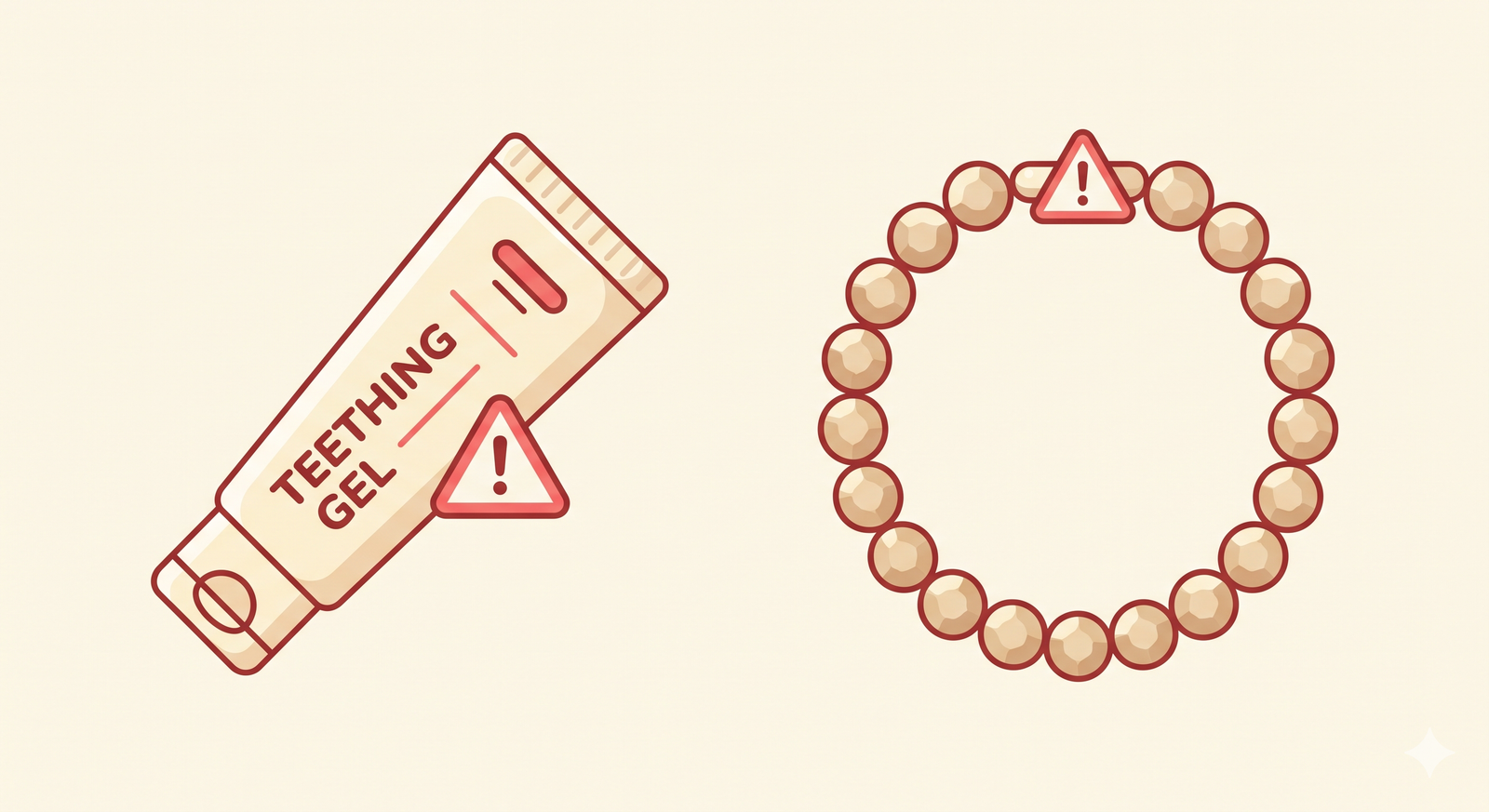
- Teething gels with benzocaine — banned by the FDA for children under 2 due to methemoglobinemia risk
- Teething necklaces or bracelets — choking and strangulation hazard, no proven benefit
- Frozen teethers or ice cubes — can freeze gum tissue and cause frostbite
- Teething biscuits or rusks — choking hazard at 4 months
- Alcohol-based remedies — toxic, never use
Best Teething Products for Drool Rash Prevention
Based on my analysis of safety, material, and efficacy, here are the products I recommend for your 4-month-old:
Bibs
- Bumkins Super Bibs — waterproof backing, but with a soft cotton top layer. Change frequently.
- Green Sprouts Cotton Bibs — 100% organic cotton, highly absorbent, multiple layers
Barrier Creams
- Aquaphor Baby Healing Ointment — petroleum-based, fragrance-free, excellent for overnight
- Burt’s Bees Baby Bee Diaper Ointment — zinc oxide based, natural ingredients, safe for face
- Lansinoh Lanolin Cream — pure lanolin, great for small areas of chapped chin
Teethers
- Comotomo Silicone Teether — soft, easy to grip, can be chilled
- Nuby Ice Gel Teether Keys — textured surface, gel-filled for longer cooling
- Munchkin Gentle Scoop Teether — designed for tiny hands, easy to clean
Toothbrushes (for gum massage)
- Baby Banana Training Toothbrush — silicone bristles, fun shape, massages gums
- Radius Totz Toothbrush — extra-soft bristles, small head, safe for 0-3 years
When to Call Your Pediatrician or Dentist
Most drool rashes resolve with consistent care. But contact a professional if:
- The rash bleeds, oozes, or has yellow crusting (possible infection)
- Your baby develops a fever over 100.4°F (38°C) — teething does not cause high fever
- The rash spreads to the arms, trunk, or genitals
- Your baby refuses to eat or drink for more than 12 hours
- You see blisters or open sores
Remember: Teething does not cause fever, diarrhea, or full-body rashes. If you see these symptoms, your baby may have an illness unrelated to teething.
Surprising Share-Worthy Insight: Drool Is Your Baby’s First Toothpaste
Here is something most parents don’t know: your baby’s drool is nature’s first tooth-cleaning system.
Saliva contains antimicrobial enzymes like lysozyme and lactoferrin that kill cavity-causing bacteria. When your baby drools constantly, they are actually washing their emerging teeth with a natural, antibacterial solution.
This is one reason why exclusive breastfeeding (which keeps the oral cavity slightly alkaline) combined with drool offers some protection against early childhood caries in the first 6 months. But once solid foods begin, you must introduce a fluoride toothpaste.
The takeaway: That puddle of drool on your shoulder? It is your baby’s first line of defense against cavities. Don’t fight it—just manage the rash.
Whispers from the Ages
In ancient Ayurvedic texts, mothers would apply a paste of neem leaves and turmeric to a teething baby’s chin to soothe rash and ward off infection. Modern science confirms both neem (antibacterial) and turmeric (anti-inflammatory) are effective. However, I must warn you: do not apply any homemade herbal paste without consulting your pediatrician. Neem can be toxic if ingested in large amounts, and turmeric stains clothing and skin deeply. Stick to petroleum jelly or zinc oxide—they are safer and more consistent. The wisdom of our ancestors is beautiful, but we apply it through the lens of modern safety.
What You Can Do Tonight
- Check your baby’s chin and neck for redness. If present, wash gently with warm water and pat dry.
- Apply a thin layer of petroleum jelly to the affected area.
- Put on a clean, dry cotton bib.
- Offer a chilled silicone teether for 5-10 minutes before bedtime.
- Place a clean muslin cloth under your baby’s head in the crib to absorb overnight drool.
- Check again at the next feeding and repeat the drying and barrier cream.
You’ve got this. Drool rash is temporary—it will resolve within days once you establish this routine. Your baby’s first teeth are on their way, and you are already protecting their smile.
Call to Action
If this article helped you, share it with another tired parent who needs to hear this. And please, leave a comment below with your own teething story—when did your baby’s first tooth appear? What worked for your little one’s drool rash? Your experience could be the lifeline another parent needs at 2 a.m.
Internal Linking Suggestions
- Best Teething Products for Babies: A Parent’s Guide
- When Do Babies Start Teething? A Complete Timeline
- Teething Remedies That Actually Work (and What to Avoid)
- Baby Gum Pain Relief: Natural and Medical Options
- Teething Symptoms vs. Real Illness: How to Tell the Difference
Principal Sources
American Academy of Pediatrics (AAP). (2022). Teething: 4 to 7 Months. HealthyChildren.org.
American Academy of Pediatric Dentistry (AAPD). (2023). Guideline on Infant Oral Health Care. Pediatr Dent.
European Academy of Paediatric Dentistry (EAPD). (2022). Guidelines on Teething and Oral Care in Infants.
Cochrane Database of Systematic Reviews. (2021). Interventions for Teething in Infants.
World Health Organization (WHO). (2023). Oral Health in Infants and Young Children.
FDA. (2018). FDA warns about rare but serious risk of methemoglobinemia with benzocaine products.
🦷 Elara Voss Editorial Recommendation
Don’t let your little one suffer through painful sleepless nights. Discover our certified amber necklaces & organic soothing teethers at the Official TeethingForBaby Store. Apply VIP code ARIA15 at checkout for an instant 15% discount!
🦷 Elara Voss Editorial Recommendation
Don’t let your little one suffer through painful sleepless nights. Discover our certified amber necklaces & organic soothing teethers at the Official TeethingForBaby Store. Apply VIP code ARIA15 at checkout for an instant 15% discount!