Imagine standing in a sterile, brightly lit pediatric hospital wing at 6:00 a.m. Your two-year-old toddler is wrapped in a small surgical gown, crying from fear and confusion as an anesthesiologist prepares a sedative mask. Within minutes, your child will be placed under general anesthesia so a pediatric dentist can perform extensive emergency restorations, root canals, or extractions on their primary teeth.
This is not a rare nightmare. It is a daily reality for thousands of families worldwide. The average financial cost of a pediatric dental intervention under general anesthesia frequently ranges from 3,000 € to 5,000 € out of pocket. The emotional cost—the guilt, the parental stress, and your child’s trauma—is completely immeasurable.
Yet, here is the most astonishing revelation: this entire scenario is almost 80% preventable if proper oral hygiene begins before your child’s very first primary tooth breaks through the surface of the gums.
I am Elara Voss — Child Development Specialist & Infant Wellness Researcher. Throughout my years studying early childhood oral wellness and pediatric development, I have witnessed a massive, systemic communication gap between clinical dental science and everyday parenting practices.
Most well-meaning parents make a significant, unintentional mistake: they wait until their baby has a full mouthful of visible teeth before buying their first toothbrush. By that time, they are often twelve to eighteen months too late.
Today, we are taking an in-depth look at a simple tool that solves this problem: the silicone ring teether training brush.
What if the best window to introduce oral hygiene is exactly when your baby is seeking teething relief? Let’s look at the science behind this 15 € preventive tool.
The Hidden Epidemic: Early Childhood Caries
To understand the real value of a 2-in-1 teether brush, we must first shine a light on a global childhood health crisis that rarely gets talked about in parenting groups. According to official data from the World Health Organization (WHO) and the American Academy of Pediatric Dentistry (AAPD), Early Childhood Caries (ECC)—commonly known as severe baby tooth decay—is the single most widespread chronic disease affecting children under five years old worldwide.
In many developed countries, ECC silently affects up to 60% of young children, making it significantly more common than childhood asthma or chronic allergies.

The consequences of ignoring early oral hygiene go far beyond simple cavities. Severe baby tooth decay causes chronic, throbbing pain that disrupts sleep patterns and causes metabolic issues due to poor nutrition.
Furthermore, because primary teeth serve as the essential structural placeholders for the permanent adult teeth waiting beneath the surface, losing them early to decay can cause severe alignment issues later in childhood.
Primary front teeth are also critical for early language development. Children who lose their incisors prematurely to severe decay frequently develop persistent speech impediments and articulation delays because they lack the hard structural surfaces needed to guide proper tongue placement.
The primary cause of this widespread epidemic is simply a late start to oral care. Waiting until your baby’s teeth are fully visible before introducing a cleaning routine gives harmful bacteria a massive head start.
The Prevention Window: Why Teething IS the Optimal Hygiene Moment
Why should parents connect teething pain with daily oral hygiene? The answer lies in a brilliant window of opportunity within your baby’s neurological development.
Between 3 and 10 months of age, an infant experiences an intense biological drive to explore objects orally. Because emerging teeth cause local inflammation and constant itching within the jaw, your baby’s focus is naturally directed inward toward their mouth.
During this teething surge, infants actively seek out objects to bite down on to find relief. They welcome oral stimulation and will gladly chew on anything that delivers soothing counter-pressure to their swollen gums.

This open, self-soothing window is the perfect developmental opportunity to introduce early oral care. If you wait until your child is 14 months old to introduce a traditional nylon toothbrush, you will often find yourself in a difficult daily power struggle.
At that stage, your toddler is asserting their independence and will often fiercely resist having a strange, hard object forced into their mouth.
By introducing a silicone ring teether training brush during the peak of teething, you are using your baby’s natural reflexes to your advantage.
The infant doesn’t see the tool as an annoying chore; they see it as a comforting source of pain relief.
This early introduction programs their developing brain to associate oral care with a positive, soothing sensory experience, laying a wonderful foundation for cooperative brushing habits that last a lifetime.
👉 Shop the 2-in-1 Silicone Ring Teether Training Brush Now
👉 Explore Our Full Baby Oral Care Collection
The 2-in-1 Science: How One Tool Solves Two Problems
The silicone ring teether training brush leaves old designs behind, elegantly solving two independent health challenges within a single piece of silicone. Let us analyze the structural science behind both sides of the device:
1. The Teether Side — Gate Control Pain Relief
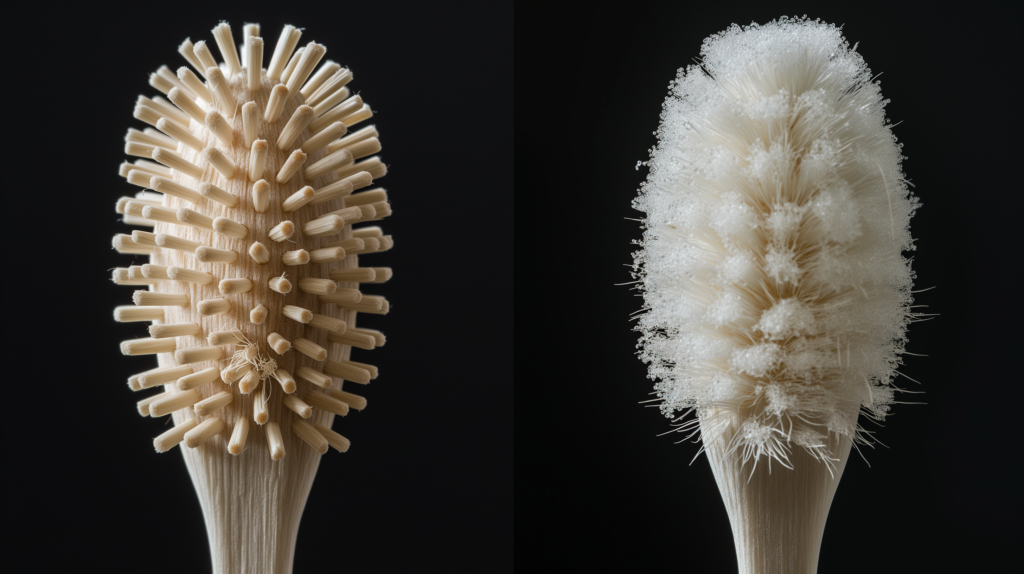
The teether side of the ring features rows of raised, multi-zone textures and firm nodules. When your baby clamps their jaw down onto these surfaces, they engage the Gate Control Theory of Pain.
The intense, rapid pressure signals generated by the textured silicone travel along fast nerve pathways, blocking the slower pain messages before they can reach the brainstem. This delivers immediate, non-toxic relief to swollen dental tissue.
2. The Brush Side — Biofilm Disruption
Even before your baby’s first white tooth officially breaks through the surface, a invisible layer of sticky bacterial biofilm—commonly known as plaque—is already coating the gingival ridges. This biofilm feeds on the natural sugars left behind by breast milk or infant formula.
As your baby chews on the soft, integrated silicone bristles of the training brush, the gentle friction breaks up this bacterial layer. This is essential primary prophylaxis, cleaning the oral environment so that emerging teeth break into a healthy space.
3. The Transition Bridge
Moving directly from a completely bare mouth to a firm, traditional nylon toothbrush can be a jarred sensory shock for a one-year-old. The soft, familiar texture of a silicone training brush serves as a gentle transition bridge.
Because your child has spent months chewing on the soft silicone bristles during play, their nervous system is already completely used to the feeling of bristled friction inside their mouth, making the switch to a real toothbrush completely stress-free.
4. The Oral Mapping Bonus
The mouth requires continuous tactile feedback to understand its own boundaries. Interacting with the dual sides of this tool provides rich proprioceptive feedback to the tongue and lips.
Feeling the difference between the dense teething nodules and the fine cleaning bristles helps the infant’s brain construct an accurate spatial map of their oral cavity. This structural mapping is a vital milestone that directly supports early chewing coordination and clear speech articulation later in childhood.
The Dentist-Backed Timeline: A Stage-by-Stage Oral Care Guide
To help you build a safe, highly effective preventative routine at home, here is the ideal chronological map for introducing early childhood oral care:
Stage 1: 3 Months+ (Before Tooth Eruption)
Introduce the tool primarily as a baby training toothbrush and sensory teether. Let your infant hold the wide, open ring handle to practice their early grasp reflexes.
Encourage them to explore the textured teething nodes, which stimulates local blood circulation and helps prepare the gingival tissue for the dental changes ahead.
Stage 2: 6 Months+ (The First White Pearls Appear)
The moment the first central incisor breaks through the gum tissue, transition your focus toward the bristle side of the tool.
Once a day, gently guide the soft silicone bristles across the new enamel surface. At this early stage, you do not need to use toothpaste; clean, fresh water is all that is required to sweep away early plaque.
Stage 3: 8 to 10 Months (Building the Daily Routine)
As the upper front teeth emerge, upgrade your schedule to twice a day—once in the morning and once right before bed. Use the soft silicone bristle side with clean water, making sure to gently brush both the new teeth and the bare gums along the back of the jaw.
Stage 4: 12 Months (The Nylon Transition)
By their first birthday, your child is ready to transition to a traditional, ultra-soft nylon pediatric toothbrush. Because they have spent months practicing with the silicone training brush, they will welcome the familiar bristled sensation.
This is the exact window to introduce a tiny, smear-sized drop of fluoride toothpaste—no larger than a single grain of rice—to strengthen the enamel structure.
Stage 5: 18 Months+ (Mastering Cooperation)
By a year and a half, your child’s daily brushing routine should be completely established.
Because oral hygiene was introduced early as a soothing teething remedy, you will completely avoid the daily power struggles that many parents face, ensuring a calm, cooperative relationship with dental care.
👉 Shop the 2-in-1 Silicone Ring Teether Training Brush Now
👉 Explore Our Full Baby Oral Care Collection
What Traditional Teethers Miss — And Why 2-in-1 Changes Everything
Standard teething toys are built with a single, narrow goal: providing temporary relief to swollen gums. While they can be very effective at numbing pain, they do absolutely nothing to clean the mouth or prepare your child for future hygiene habits.
On the other hand, traditional plastic infant toothbrushes feature long, dangerous handles and stiff nylon bristles that are far too harsh for sensitive, inflamed gums.
The silicone ring teether training brush fixes this design gap by occupying the exact intersection of these two needs.
It uses premium medical-grade silicone to ensure that the material is soft enough to soothe an active teething wave, yet structurally sturdy enough to disrupt bacterial plaque.
It transforms a basic teething toy into an effective public health tool for your home, protecting your child’s long-term wellness while delivering immediate comfort.
The Oral Microbiome Revolution
The science of pediatric dentistry has made incredible leaps over the past few years, moving far beyond simply treating cavities to look at the complex world of the oral microbiome.
Clinical research published by Dr. Gross and his team (2010) on the development of the infant oral cavity revealed that the bacterial communities that establish themselves within your baby’s mouth during the first twelve months lay the foundation for their long-term oral health.
If harmful, acid-producing bacteria like Streptococcus mutans are allowed to colonize the gums early without interference, they form a resilient, sticky biofilm that targets new enamel the moment a tooth erupts.
Gently cleaning your baby’s gums with a soft silicone training brush disrupts this early colonization process.
This simple daily friction helps shift the oral microbiome toward a healthy, balanced composition, lowering your child’s genetic risk for cavities and supporting their long-term immune performance.
5 Parent Strategies for the Training Brush
To ensure a smooth, successful transition to oral care in your home, try using these five practical, pro-parent strategies during your daily routine:
- The Two-Sided Session Routine: Always open your oral care session by letting your baby chew on the textured teether side to soothe any immediate pain. Once their gums are comforted and relaxed, gently flip the tool over to practice brushing with the bristle side.
- The Mirror Game Integration: Stand with your baby in front of a bathroom mirror during their brushing routine. Infants are naturally fascinated by reflections, and watching their own mouth interact with the colorful ring teether transforms a hygiene chore into a fun visual game.
- The Consistent Brushing Song: Sing a specific, short song every single time you use the bristle side of the tool. Repeating the same melody acts as a clear sensory cue, helping your baby understand that it is time to transition from play to cleaning.
- The Cool Refrigerator Introduction: During an intense teething wave, place the tool in the refrigerator for twenty minutes before use. The cool silicone bristles deliver a refreshing cryotherapeutic massage that calms inflamed tissue instantly.
- The Power of Reward Language: Celebrate every single session with enthusiastic, positive reinforcement. Saying phrases like “Wonderful! Your smile is so clean and bright!” helps program your baby’s brain to connect oral care with pride and success.
Safety & Certifications
When selecting an oral care tool that will spend hours inside your child’s mouth, safety credentials must be completely verified to global medical baselines:
| Safety Metric Baseline | Certification Status | Direct Benefit for Your Child |
|---|---|---|
| Material Base Purity | 100% Medical-Grade Silicone | Completely pure, chemically inert, and non-toxic. |
| Chemical Analysis | BPA, Phthalate, and Lead-Free | Total protection for the developing endocrine system. |
| Mechanical Layout | Monobloc Solid Mold (One-Piece) | Zero Choking Hazard. No small handles or heads can snap loose. |
| Design Engineering | Integrated Wide Protection Ring | Physically prevents over-insertion past the safe anterior oral zone. |
| Thermal Durability | Dishwasher & Boil-Safe | Allows for effortless high-heat sterilization to eliminate germs. |
How the 2-in-1 Tool Compares to the Competition
| Care Tool Type | Teething Relief | Brushing Function | Age Range | Safety Shield | Transition Value |
|---|---|---|---|---|---|
| 2-in-1 Silicone Brush | Excellent | Excellent (Bristles) | 3M to 18M | Yes (Full Ring) | Exceptional |
| Classic Teething Ring | Excellent | None | 3M to 12M | No | Poor |
| Finger Toothbrush | Poor | Good | 6M to 12M | No (Bite Risk) | Moderate |
| Hard Plastic Baby Brush | Poor (Too Harsh) | Moderate | 12 Months+ | No | Moderate |
| Traditional Gauze Pad | Poor | Moderate | 0M to 6M | No | Poor |
FAQ: Expert Answers to Parent Questions
1. Do I need to use toothpaste with the silicone training brush?
No, toothpaste is not necessary during the early teething stages. For babies under twelve months old, clean, fresh water paired with the gentle friction of the silicone bristles is highly effective for sweeping away plaque.
2. Which side of the 2-in-1 tool should I offer my baby first?
Always lead with the textured teether side. This allows your baby to satisfy their instinctive urge to bite and numbs any immediate pain, making them much more relaxed and cooperative when you switch to the bristle side.
3. What is the absolute best age to introduce this training brush?
The ideal window is 3 months old. Introducing the tool early gives your baby plenty of time to practice gripping the handle and get completely comfortable with the texture before their first teeth arrive.
4. How often should my baby use the bristle side of the tool?
Once your baby’s first teeth begin to break through the surface, use the bristle side twice a day—once in the morning after breakfast and once right before bed to clear away milk sugars.
5. Does this 2-in-1 tool make a thoughtful baby shower gift?
It is an outstanding, highly practical gift choice. Experienced parents love it because it addresses a real, daily milestone while actively protecting a child’s health from the very start.
👉 Shop the 2-in-1 Silicone Ring Teether Training Brush Now
👉 Explore Our Full Baby Oral Care Collection
Whispers from the Ages
The parental drive to keep a child’s mouth clean and comfortable links our modern kitchens with ancient traditions across the globe.
⚠️ AGELESS CAUTION: These practices come from traditions, often thousands of years old. They have not been validated by modern controlled scientific studies. They may carry risks of allergy, choking, toxicity, or simple ineffectiveness. They do not replace medical advice or proven treatment. Use at your own responsibility, and only after speaking with your child’s health professional.
In the royal households of ancient China, caregivers wrapped small pieces of pure, raw woven silk around their fingers, dipping the fabric into warm green tea to gently cleanse the gums of newborn infants after feeds.
Across early India, traditional Ayurvedic practices recommended using the softened, frayed ends of natural neem twigs—known for their organic antibacterial properties—to carefully massage a baby’s swollen dental ridges.
Meanwhile, within the early Roman Empire, mothers mixed small amounts of natural sea salt with olive oil on a soft linen cloth, using the smooth mixture to clean and soothe an infant’s mouth during a heavy teething wave.
The silicone ring teether training brush represents the modern culmination of this ancient wisdom. It takes the timeless understanding that oral hygiene must begin before teeth arrive and pairs it with modern medical-grade silicone to deliver absolute safety for today’s children.
The Verdict: A High-Value Investment in Public Health

Let us return to our opening calculation. On one side of the scale, we have the stressful reality of a 3,000 € emergency pediatric surgery under general anesthesia to treat advanced baby tooth decay.
On the other side sits a simple, purpose-driven 15 € tool that combines soothing teething relief with proactive plaque control from day one. The financial and emotional math is perfectly clear.
The silicone ring teether training brush is far more than a simple nursery toy; it is a highly effective piece of preventive health equipment for your home.
By taking your baby’s natural urge to chew and transforming it into an early oral hygiene routine, it completely removes the main anxieties of dental care.
It successfully protects your child’s developing enamel and oral microbiome from harmful bacteria, while saving your family from avoidable pain and medical expenses. For parents eager to protect their child’s smile with absolute confidence, this 2-in-1 tool is an essential investment.
For complete teething pain relief: the Happy Crab Silicone Teether — 360° gum relief for babies 3M+.
Complete guide: Understanding Teething in Babies — Complete 2026 Encyclopedia
Expert relief guide: Easing Teething Discomfort — Science-Backed Guide 2026
👉 Shop the 2-in-1 Silicone Ring Teether Training Brush Now
👉 Explore Our Full Baby Oral Care Collection
Sources & References
- AAPD — Early Childhood Caries Policy, 2022
- WHO — Oral Health Fact Sheet, 2023
- AAP — Baby Teething & Tooth Care, 2023
- FDA — Safely Soothing Teething Pain, 2023
- Memarpour et al. — Teething Symptoms Study, 2015