The most effective baby teething remedies are gentle gum massage, a chilled (not frozen) teething ring, and a cool damp washcloth. Avoid benzocaine gels and belladonna tablets — the FDA warns against both for babies under 2.
As a parent, there’s nothing more heartbreaking than seeing your baby in distress due to teething pain. The incessant crying, the refusal to feed, and the lack of sleep can be overwhelming. In this guide, we’ll walk through which baby teething remedies are actually backed by pediatric guidance — and which ones to leave on the shelf.
Most babies start teething between 4 and 7 months old, and each emerging tooth can bring 3 to 8 days of discomfort before it settles. The good news: a small handful of simple, safe remedies cover most of what your baby needs.

Understanding Teething and Its Symptoms
Before we dive into the remedies, it’s essential to understand what teething is and what symptoms to look out for. Teething, also known as odontiasis, is the process by which a baby’s teeth erupt through the gums. By the time a child turns 3, most have all 20 primary teeth in place.
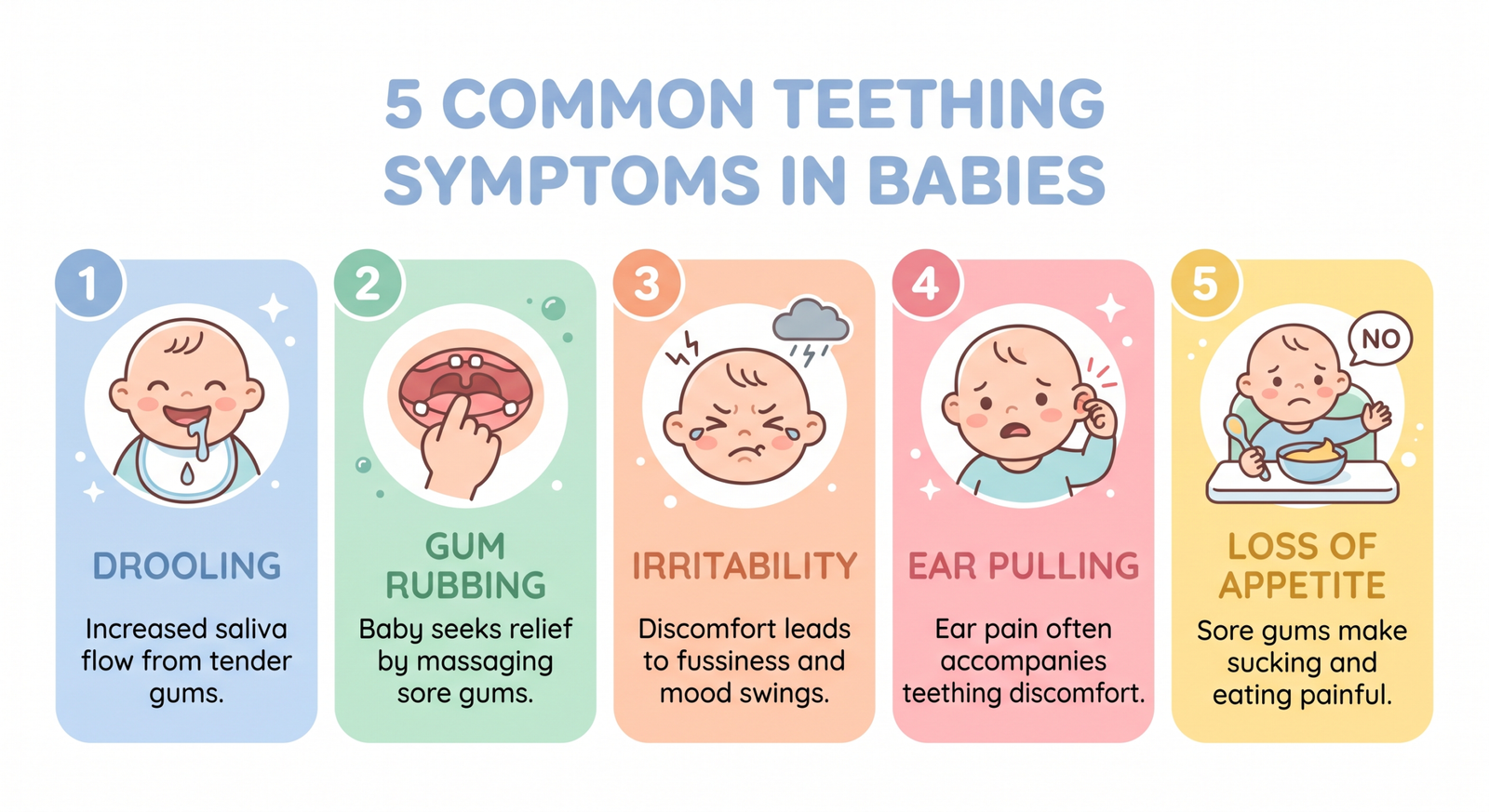
Some common symptoms of teething include:
Irritability and fussiness
Drooling and excessive saliva production
Loss of appetite
Ear pulling and rubbing
Gagging and coughing
A true fever (over 100.4°F / 38°C) or diarrhea is not caused by teething — if either appears, it’s worth a call to your pediatrician rather than waiting it out. For a deeper breakdown of what’s normal at each stage, see our complete guide to teething symptoms.
Science-Backed Baby Teething Remedies
When it comes to baby teething remedies, not all popular options are actually safe. Here’s what pediatric guidance currently recommends — and what to skip.
Cold teething toys and objects: A firm, BPA-free teething ring chilled (not frozen) in the fridge is one of the safest, most effective baby teething remedies. Browse our collection of safe, BPA-free teething toys. Avoid liquid-filled rings or anything that could crack into small pieces.
Gentle gum massage: Wash your hands and gently rub your baby’s gums with a clean finger for a minute or two. The AAP lists this as a first-line teething remedy because it works without any risk.
A cool, damp washcloth: Chill a clean washcloth and let your baby chew on it. Simple, free, and genuinely effective.
What You Can Do Tonight to Soothe Your Baby’s Teething Pain
Here are some practical steps you can take tonight:
Use a cold, damp washcloth to soothe sore gums
Offer a chilled, firm teething toy to chew on
Gently massage your baby’s gums with a clean finger
If your pediatrician has approved it for your baby’s age and weight, a dose of infant acetaminophen can help on a rough night
A surprising insight into teething is that some babies show almost no symptoms at all! Every baby is different, and what works for one may not work for another. Be patient and try a few of the remedies above to see what settles your baby best.
Teething Remedies to Avoid (FDA & AAP Warnings)
Some traditional teething remedies are no longer recommended by pediatric and regulatory authorities:
Benzocaine or lidocaine teething gels (Orajel, Anbesol, and similar products): The FDA has linked these to more than 400 reported cases of methemoglobinemia, a rare but serious blood disorder, since 1971 — and warns against their use in children under 2. They also wash out of a baby’s mouth within minutes, offering little real benefit.
Homeopathic teething tablets or gels containing belladonna: FDA lab testing found inconsistent — sometimes dangerously high — levels of belladonna in these products, leading to a recall request for Hyland’s teething tablets.
Amber teething necklaces: Both the FDA and AAP advise against these due to choking and strangulation risk.

If your baby seems unusually uncomfortable, the safest next step is a call to your pediatrician — not an OTC numbing product.
Frequently Asked Questions About Baby Teething
When does teething usually start?
Most babies start teething between 4 and 7 months old, though some begin as early as 3 months or as late as 12 months. By age 3, most children have all 20 baby teeth.
How long do teething symptoms last for each tooth?
Discomfort from a single emerging tooth typically lasts 3 to 8 days, with symptoms easing once the tooth breaks through the gum.
Is teething gel safe for my baby?
No — products containing benzocaine or lidocaine are not recommended for children under 2 due to FDA safety warnings. Gum massage and chilled teething toys are safer alternatives.
Can teething cause a fever?
Teething may cause a very mild temperature rise, but a fever over 100.4°F (38°C) or diarrhea is not caused by teething — call your pediatrician if these occur.
When should I call the pediatrician about teething?
Reach out if your baby has a high fever, persistent diarrhea, refuses to feed for an extended period, or seems unusually distressed — these aren’t typical teething symptoms.
Whispers from the Ages

In many ancient cultures, teething was seen as a significant milestone in a baby’s life. Our ancestors used various remedies to soothe teething pain, including chewing on twigs and roots, herbal remedies like chamomilla and lavender, and massaging the gums with oils and herbs.
Please note that some of these ancient remedies aren’t suitable for modern babies — certain herbal preparations can be toxic in infants, so it’s always best to check with your pediatrician before trying anything outside the remedies covered above.
As a parent, it’s natural to feel overwhelmed and unsure about how to soothe your baby’s teething pain. But with the right remedies — and a little patience — you can help your baby feel better and turn teething into a far more manageable stretch.
If you know a parent struggling with their baby’s teething pain, share this article with them! And drop a comment with your own teething story — we’d love to hear how you got through it.
For more, check out our baby oral care guide and our collection of teething toys above.
For more information on baby teething and oral health, check out our other articles on teething symptoms and baby oral care products.
Sources:
- FDA — Safely Soothing Teething Pain in Infants and Children: https://www.fda.gov/consumers/consumer-updates/safely-soothing-teething-pain-infants-and-children
- AAP / HealthyChildren.org — Teething & Tooth Care: https://www.healthychildren.org/English/ages-stages/baby/teething-tooth-care/Pages/default.aspx
- MedlinePlus (NIH) — Teething: https://medlineplus.gov/ency/article/002045.htm