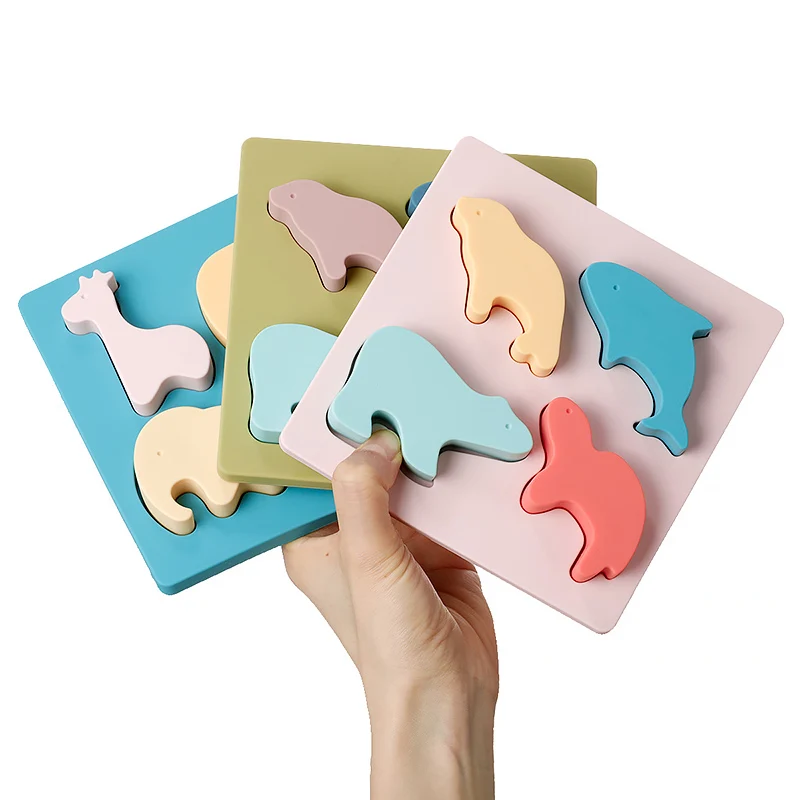
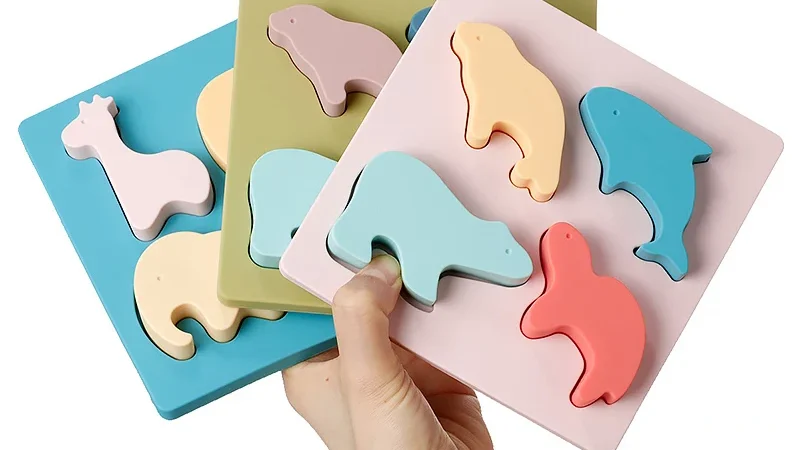
A nine-month-old infant sits quietly on a minimalist wool rug, entirely focused on two brightly colored objects in their lap. In their left hand, they hold a small, soft sage-green bear; in their right, a slightly larger terracotta-hued lion. For a few moments, they turn the pieces over, exploring their smooth surfaces with their fingers and mouth.
Then, guided by a sudden wave of curiosity, the infant aligns the two shapes. With a gentle push, the little bear slides perfectly inside the hollow body of the lion.
The infant instantly stops moving, their eyes widen, and a look of pure, unadulterated astonishment washes over their face. They lift the lion, turn it upside down, watch the bear slide out onto the rug, and let out a joyful squeal of discovery.
This beautiful moment is a profound cognitive milestone. It is your child’s very first authentic “Eureka!” moment—a breakthrough in understanding spatial physics.
I am Elara Voss — Child Development Specialist & Infant Wellness Researcher. My daily focus is analyzing how early childhood toys interact with the physical and cognitive development of your child.
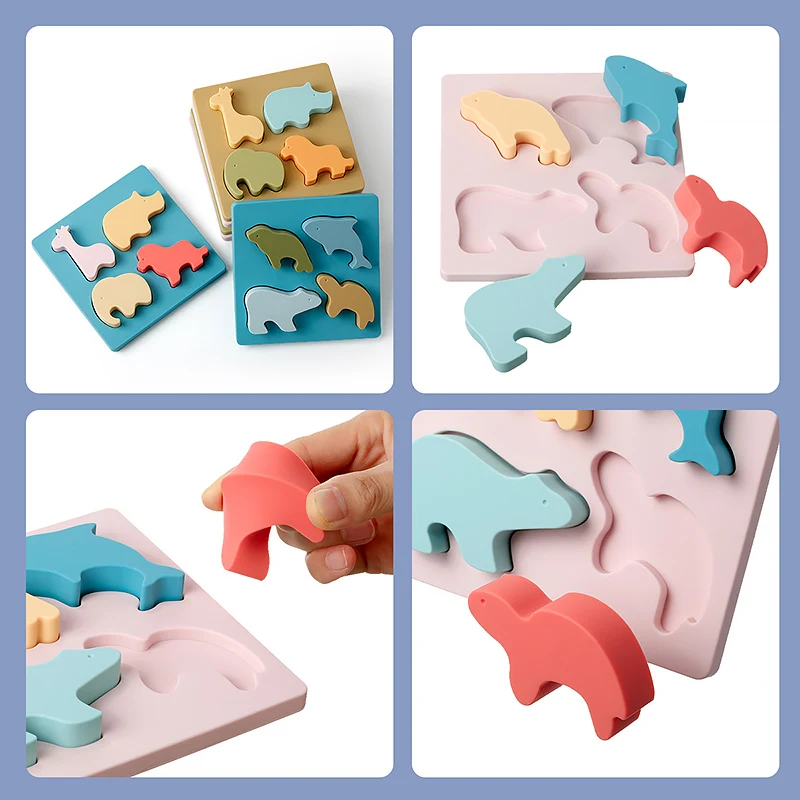
Today, we are taking an exhaustive, science-backed look at a product that is making waves in modern nursery design: the Wild Wonders Silicone Animal Nesting Puzzle. Is this beautifully crafted set truly a 6-in-1 developmental tool, or is it simply an aesthetic trend? Let’s break down the developmental science behind this multi-layered puzzle.
👉 Shop the Wild Wonders Set Now
👉 Explore Our Full Montessori Collection
The Nesting Toy animal Phenomenon: Why “Inside” Is the Most Important Concept a Baby Can Learn
To an adult, placing one hollow container inside another is an automatic, thoughtless action. For a developing infant, however, mastering the concept of containment is a massive leap forward in spatial geometry.
Jean Piaget, the pioneer of early childhood cognitive development, noted that during the sensorimotor stage, children must build their own internal models of spatial relations through direct, hands-on testing.
Understanding containment means learning that a smaller object can be entirely enclosed by a larger one, which introduces early ideas about boundaries, volume, and hidden space.
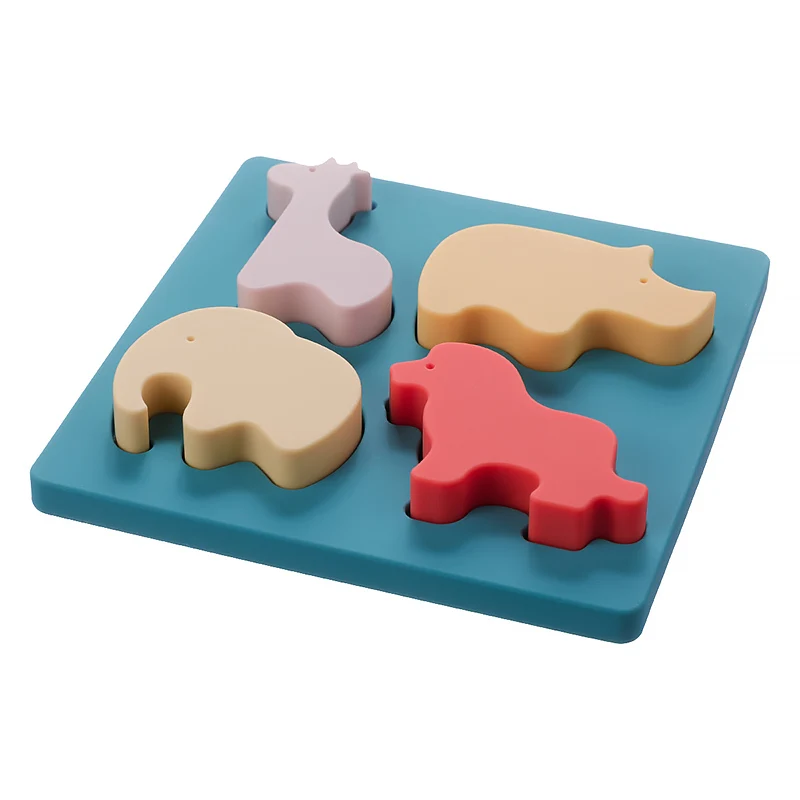
Pioneering research published by Dr. Susan Hespos and Dr. Elizabeth Spelke (2004) demonstrated that infants begin to understand the physical rules of containment long before they develop the spoken language to describe them. Their studies revealed that a baby’s brain can visually calculate whether an object will fit inside a container as early as five months old.
When a child physically tests this theory by sliding the Wild Wonders animals together, they are translating visual logic into physical reality. This play pattern is nothing less than intuitive math—an early exploration of three-dimensional space that prepares the brain for advanced logical reasoning later in life.
Why the Silicone Animal Nesting Puzzle Beats Plastic & Wood
Nesting toys have been a childhood staple for generations, but traditional materials like rigid plastic or painted wood present real practical challenges in a modern home.
1. The Drawbacks of Plastic Nesting Cups
Mass-produced plastic nesting cups are a common fixture in many playrooms, but they carry hidden developmental liabilities. They are frequently made from low-grade plastics containing toxic polymers like Bisphenol A (BPA) or PVC, which act as endocrine disruptors.
When an infant steps on or throws these rigid cups, they can easily crack, leaving behind sharp, dangerous edges. From a sensory perspective, hard plastic offers very little tactile interest. It is slippery, uniform, and makes a harsh, clanging noise when knocked over, which can easily over-stimulate a sensitive child.
2. The Realities of Wooden Nesting Dolls
Traditional wooden nesting dolls (like classic Russian Matryoshka dolls) carry an attractive, artisan appeal, but they are poorly suited for the messy reality of infancy. Wood is a porous material that easily absorbs saliva, trapping moisture and harboring bacteria deep within its grain.
It cannot be boiled or steam-sterilized without warping or cracking, and the constant moisture can cause the wood to expand, making the pieces stick together. Furthermore, the protective paint or lacquer inevitably chips away under heavy chewing, presenting a real risk of splinter or toxin ingestion.
3. The Clear Advantages of Premium Silicone
The Wild Wonders silicone animal nesting puzzle eleganty solves all of these material issues at once through high-purity, food-grade silicone engineering:
- Teething-Safe: The material yields gently to bite force, safely massaging sore gums without risk of injury.
- Effortless Hygiene: Non-porous and hydrophobic, the entire set can go straight into a high-temperature dishwasher for total sanitization.
- Resilient Flexibility: It can be dropped, stepped on, or squeezed without cracking, warping, or losing its shape.
- A Peaceful Sensory Experience: Silicone absorbs impact energy silently, eliminating harsh clanging noises when towers tumble.
- One-Piece Construction: Each animal is molded as a single solid piece, ensuring there are zero small parts or gluing points to present a choking hazard.
The 6-in-1 Scientific Breakdown: One Toy, Six Milestones
The true value of a premium montessori nesting toy baby lies in its versatility. The Wild Wonders set acts as a multi-stage developmental catalyst, addressing six distinct growth areas in one well-thought-out product:
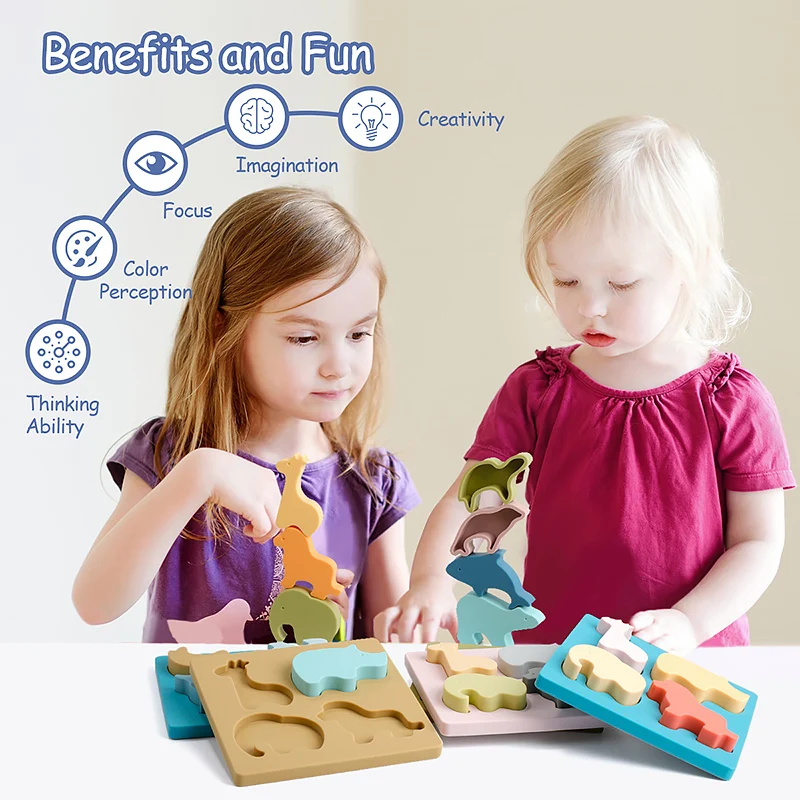
1. The Soothing Teether
Before your baby learns to sort or stack, they will treat each animal as a sensory teething object. The high-density food-grade silicone delivers safe counter-pressure to sore, swollen gums, while the detailed textures on each animal’s body provide a soothing, anti-inflammatory massage during early tooth eruptions.
2. The Nesting Puzzle
Fitting the animals inside one another exercises advanced spatial reasoning and depth perception. Your child must calculate size variations in three dimensions, learning how to rotate their wrists and align the pieces correctly to achieve a perfect, snug fit.
3. The Stacking Tower
Flipping the hollow animals over transforms the set into a vertical animal stacking toy. Building a tall tower demands intense fine motor control, hand-eye coordination, and a basic understanding of gravity and balance, teaching early lessons in cause-and-effect as they watch the tower tumble.
4. Size Discrimination
The puzzle provides an intuitive, hands-on lesson in relative scale. As children play, they naturally learn to compare objects, developing the vocabulary and cognitive framework needed to differentiate between concepts like smaller, bigger, smallest, and biggest.
5. Early Language & Animal Recognition
The realistic, detailed animal shapes serve as an excellent vocabulary builder. Parents can name each creature—such as the bear, the lion, or the hippo—and mimic their natural sounds during play, connecting language with physical objects to accelerate early speech acquisition.
6. Visual Discrimination & Color Theory
Molded in a curated palette of soft, Montessori-friendly tones, each animal features a distinct color. This helps your child practice visual discrimination, learning to identify, sort, and match pieces based on subtle color shifts without over-stimulating their nervous system.
👉 Shop the Wild Wonders Set Now
👉 Explore Our Full Montessori Collection
The Animal Connection: Why Biological Shapes Excel
When choosing a size sorting toy toddler tool, parents often wonder whether they should select traditional geometric shapes (like circles, squares, or triangles) or biological forms like animals. Modern cognitive research suggests that biological shapes offer clear learning advantages for the youngest minds.
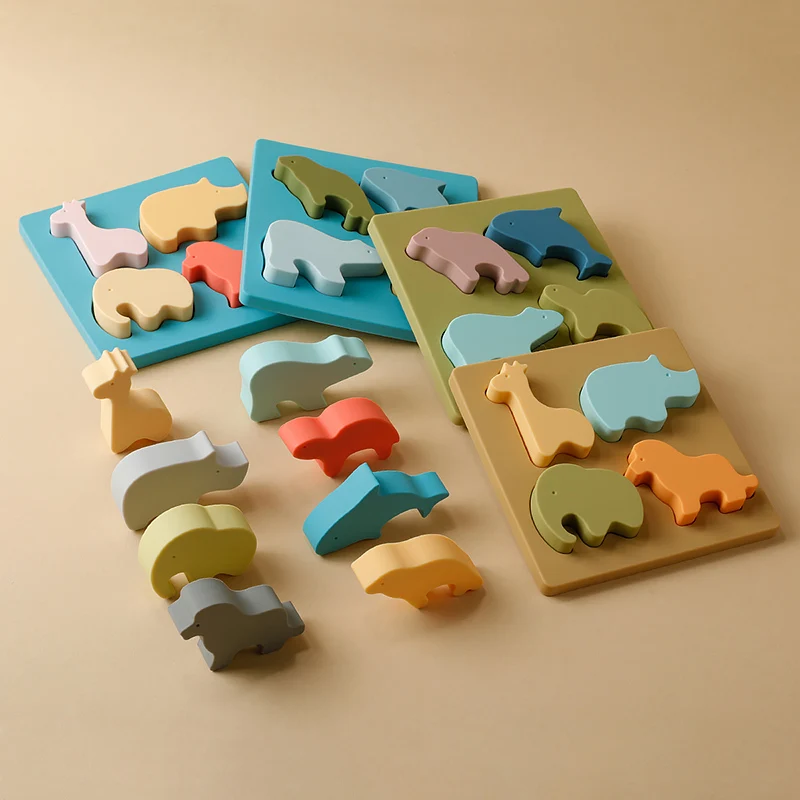
Landmark research led by Dr. George Merriman (1999) on early categorization revealed that infants learn to identify and name objects up to 40% faster when the items feature biological characteristics (such as eyes, faces, and animal limbs) compared to abstract geometric forms.From an evolutionary perspective, the human brain is deeply wired to track, identify, and remember living things.
By mapping shapes onto familiar animal forms, the Wild Wonders puzzle works with your child’s natural cognitive programming. Each piece becomes an engaging character rather than a cold geometric concept, transforming a simple size-sorting exercise into a rich, intuitive lesson in vocabulary and language.
Developmental Benefits by Age: A Toy That Grows
An exceptional open-ended toy adapts beautifully to your child’s changing developmental milestones. The Wild Wonders puzzle offers a brilliant multi-year lifespan:
6 Months+: Tactile & Texture Exploration
At this early stage, the pieces serve as safe sensory objects. Your baby will grasp the animals, pass them from hand to hand to practice their early grasp reflexes, and safely mouth the textured edges to soothe teething discomfort.
9 Months+: Discovering Cause-and-Effect
As object permanence and spatial awareness blossom, babies become fascinated by taking things apart. They will delight in watching you assemble the nested puzzle, pulling the animals out one by one, and exploring early concepts of open and closed space.
12 Months+: First Stacking Successes
Around their first birthday, fine motor control moves forward. Toddlers will begin trying to stack two or three of the larger animals vertically, experimenting with balance, hand placement, and gravity.
15 Months+: Guided Size Discrimination
With a parent’s gentle guidance, toddlers can begin identifying size relationships. They will practice finding the “biggest” animal or tracking down the “smallest” piece, building early mathematical concepts through hands-on play.
18 Months+: Independent Nesting Mastery
Fine motor precision and spatial logic now connect fully. Your toddler will comfortably sort, rotate, and nest all six animals independently, experiencing a profound boost in self-esteem and independent focus.
2 Years+: Complex Imaginative Narratives
The abstract puzzle now transforms into a vibrant playground for the imagination. The silicone animals become characters in elaborate stories, building homes out of the larger hollow shells, practicing counting, and engaging in advanced cooperative play.
The Montessori Curriculum: 5 Activities With Wild Wonders
To help parents unlock the full educational potential of this versatile set, here are five practical, Montessori-inspired play setups you can introduce at home today:
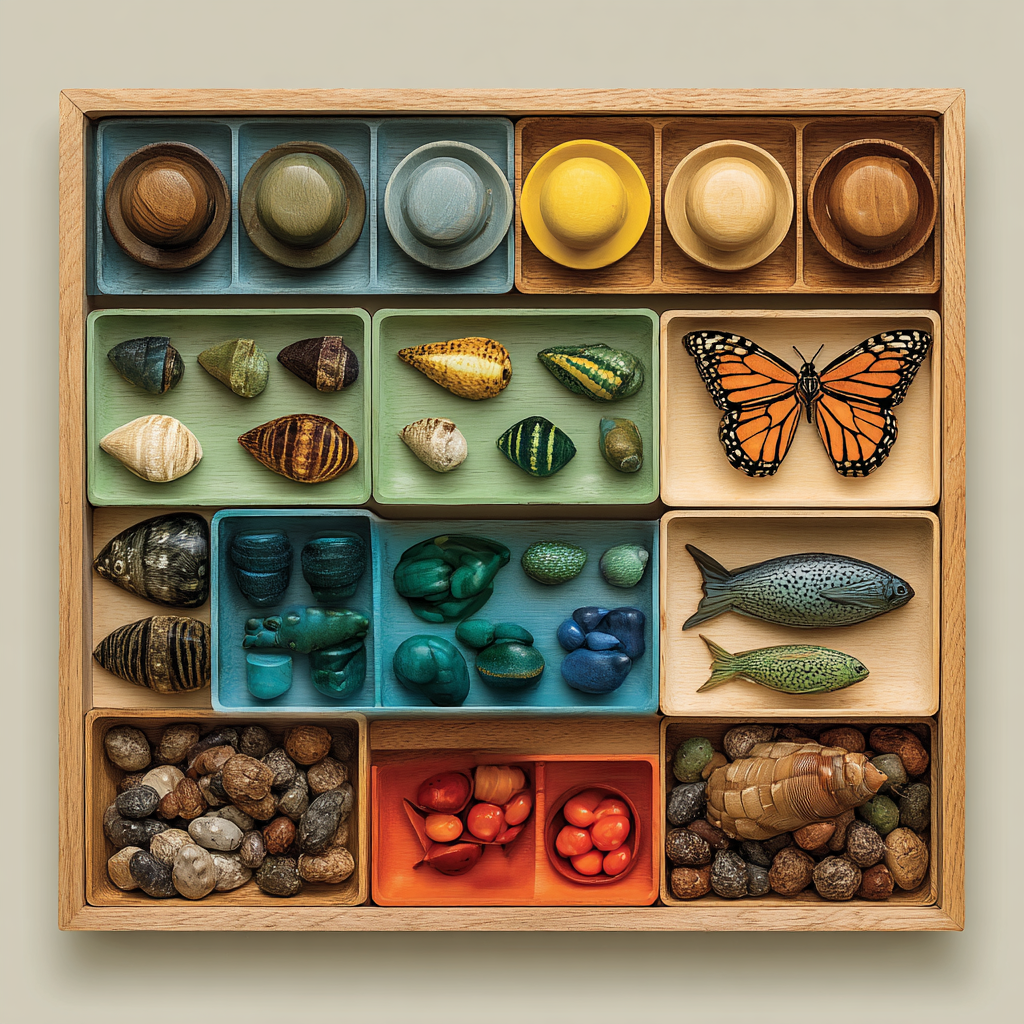
- “Biggest First” Sequencing: Arrange the six animals randomly on a play mat. Guide your toddler to find the largest piece, place it down, and slowly locate the next largest animal to build an orderly, horizontal sequence from biggest to smallest.
- The Animal Safari Hunt: Hide the individual silicone pieces around your living room or play space. Encourage your child to go on a “safery hunt” to find them, naming each animal and practicing its sound as it is discovered.
- The Sound & Story Match: As your child nests each piece inside the larger one, tell a simple story connecting the animals. For example, “The little bear went to visit their friend the lion…” This builds narrative thinking and early speech connections.
- The Nesting Speed Challenge: For older toddlers, introduce a fun timing game. Use a simple visual timer or sand glass and see how quickly they can correctly align, rotate, and nest all six pieces into a compact stack.
- The Fleet of Bath Animals: Bring the entire waterproof set directly into the bathtub. Because high-purity silicone is naturally mold-resistant and floats beautifully, the hollow animals turn into fantastic water-scooping cups, providing a fun, tactile lesson in fluid dynamics and flotation physics.
Safety & Certifications
When selecting toys that will frequently contact your child’s hands and mouth, verifying safety credentials is a critical step for complete peace of mind.
| Safety Benchmark Metric | Certification Status | Direct Parent Benefit |
| Material Base Purity | 100% Food-Grade Silicone | Zero toxic chemical leaching; entirely safe to mouth. |
| Chemical Analysis | BPA, Phthalate, & Lead-Free | Total protection for the developing endocrine system. |
| Mechanical Security | Solid, Monobloc Mold per Animal | Zero Choking Hazard. No small parts can break loose. |
| Surface Pigment | Dye-Infused Base Polymer | No surface paints, varnishes, or lacquers to flake off. |
| Thermal Durability | Dishwasher, Boiler, & Fridge Safe | Effortless cleaning and safe option for cooling therapy. |
How Wild Wonders Compares to the Competition
| Nesting Toy Type | Safety Profile | Teether Safe | Washability | Age Longevity | Montessori Value |
| Wild Wonders Silicone | Maximum | Yes (Soft) | Excellent (Dishwasher) | 6M to 3 Years+ | Excellent |
| Plastic Nesting Cups | Low (BPA/PVC) | No | Moderate (No high heat) | 12M to 2 Years | Poor (Cartoonish) |
| Wooden Russian Dolls | Medium (Splinters) | No | Surface wipe only | 18M to 4 Years | Good (Artisan) |
| Soft Fabric Nesting | High | Low | Moderate (Washer) | 6M to 1 Year | Poor (Collapses) |
FAQ: Expert Answers to Parent Questions
1. What is the precise age recommendation for the Wild Wonders nesting puzzle?
The set is safety-certified and developmentally balanced for infants starting at 6 months old up to toddlers at 3 years of age, moving from a soothing teether to a complex storytelling tool.
2. How many individual animal pieces are included in the collection?
The Wild Wonders puzzle features a beautifully balanced selection of 6 distinct, nesting animal pieces, carefully graduated in size to encourage spatial logic and size sorting.
3. Is it genuinely safe for my teething baby to chew on these animals?
Yes, absolutely. The puzzle is crafted from 100% premium, non-porous food-grade silicone. It is completely free from surface paints, toxic dyes, or chemical plasticizers, making it perfectly safe for oral soothing.
4. Can this nesting set be submerged in bathwater safely?
Yes! Silicone is naturally waterproof, non-porous, and hydro-resistant. Unlike traditional hollow plastic toys, these open shapes have no hidden cavities that trap stagnant water, making them completely mold-resistant.
5. What specific animals are featured in this educational set?
The 6-piece puzzle includes a carefully selected assortment of globally recognized creatures: a bear, a lion, a hippo, an elephant, a monkey, and a little koala, providing a fantastic foundation for early vocabulary building.
👉 Shop the Wild Wonders Set Now
👉 Explore Our Full Montessori Collection
Whispers from the Ages — The Universal Magic of Objects Within Objects

The deep fascination a child experiences when discovering an object hidden inside another connects us to the very history of human toy engineering.
⚠️ AGELESS CAUTION: These practices come from traditions, often thousands of years old. They have not been validated by modern controlled scientific studies. They may carry risks of allergy, choking, toxicity, or simple ineffectiveness. They do not replace medical advice or proven treatment. Use at your own responsibility, and only after speaking with your child’s health professional.
While many parents are familiar with the classic Russian Matryoshka nesting dolls developed in the late nineteenth century, the concept of nested objects is actually far older. In ancient China, dating back to the Song Dynasty (around the sixth century), artisan woodworkers crafted exquisite sets of nested wooden boxes. These items were used as educational puzzles to teach young minds precision, spatial geometry, and patience.
Similarly, in pre-Columbian Mexico, archeologists have uncovered beautifully detailed, nested ceramic animal figures inside ancient Aztec settlements.
For thousands of years, the simple mystery of “the object within the object” has captivated children across every great civilization.
The Wild Wonders Silicone Animal Nesting Puzzle honors this universal legacy, taking a timeless cognitive concept and upgrading the medium to clean, indestructible food-grade silicone for absolute safety in today’s modern home.
The Verdict: Is the Wild Wonders Silicone Animal Nesting Puzzle Worth It?
The Wild Wonders Silicone Animal Nesting Puzzle is a standout example of purpose-driven children’s design. By combining the safety of premium food-grade silicone with the proven developmental power of open-ended Montessori play, it delivers an exceptional learning experience.
It completely protects your baby from toxic plastics, brittle broken edges, and paint flakes, while actively building their fine motor precision, spatial reasoning, and language development. For parents seeking a thoughtful, long-lasting toy that grows beautifully alongside their child, the Wild Wonders set represents an outstanding investment.
Complete your Montessori collection with our Pastel Dreams Silicone Rainbow Stacker — the open-ended toy that grows from 6M to 5Y.
Also loved by parents: our Soft Building Blocks Silicone Fruit Stacking Set — 7-piece Montessori stacking toy for babies 6M+.
Read our complete guide: Understanding Teething in Babies — Complete 2026 EncyclopediaSources & References
- AAP — The Power of Play, 2018
- UNICEF — Learning Through Play, 2018
- American Montessori Society, 2023
- Lillard et al. — Pretend Play, 2013
- NAEYC — Role of Play, 2018