The best wearable baby teether is one that never hits the floor.
You know the rhythm. You’re at a café, or perhaps just sitting on the nursery floor, and you hear that familiar thud. Your baby has dropped their teething ring for the tenth time in ten minutes. You bend down, wipe it off (or search frantically for a sterilizing wipe), and hand it back—only for the cycle to repeat sixty seconds later. It is the “infinite pick-up” loop, and it is the hidden cardio workout of every parent.
I am Elara Voss — Child Development Specialist & Infant Wellness Researcher. Throughout my years of studying infant motor milestones and oral-motor development, I have seen parents struggle with this exact frustration. It’s not just about the germs on the floor; it’s about the interruption of your baby’s self-soothing flow. Today, we are analyzing the Little Dino wearable baby teether, a product designed to break the drop-cycle. Is this the “anti-drop” miracle parents have been waiting for?
The Floor Problem: Why Every Wearable Baby Teether Matters
To understand why your baby keeps dropping their toy, we have to look at the palmar grasp development that occurs between 3 and 6 months of age. At this stage, an infant’s ability to “hold” is driven by a primitive reflex. While they can wrap their fingers around an object, they lack the conscious muscular endurance to maintain that grip when they get distracted or tired.
It is a common design flaw in traditional teething rings: they require the baby to exert constant effort to keep the tool in their hand. When the baby relaxes, the teether falls. This isn’t the baby’s fault—it’s a mismatch between the product’s shape and the baby’s developmental stage. The wearable baby teether addresses this by shifting the “work” from the baby’s grip to the ergonomic design of the teether itself.
The Science of Hand-Teethers: Reflexes and Proprioception
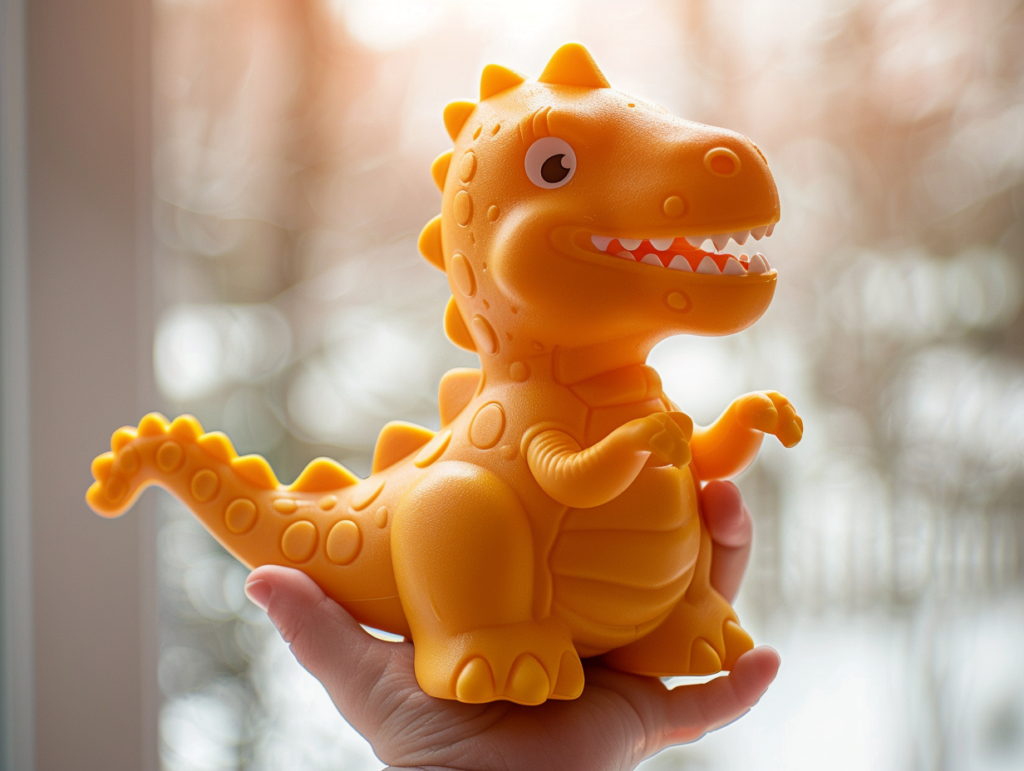
Why is putting a teether on the hand so much more effective than putting it in the hand? It comes down to three scientific pillars:
1. The Hand-to-Mouth Reflex
From the womb, babies have a natural instinct to bring their hands to their mouths. It is their first form of self-soothing. By utilizing a hand teether for babies, we are working with nature rather than against it. The Little Dino sits right where the baby’s hand naturally travels.
2. Proprioception: “Where is my hand?”
Proprioception is the sensory system that tells the brain where the body is in space. For a 3-month-old, finding a loose toy is hard; finding their own hand is a neurological “home base.” A silicone hand teether for 3 months helps bridge this gap, allowing the baby to find relief without needing to look for a separate object.
3. Sustained Self-Soothing
When a baby doesn’t have to worry about dropping their teether, they can focus on the sensory relief of the massage. This leads to longer periods of calm and better development of oral-motor exploration.
Anatomy: What Makes This Wearable Baby Teether Unique
Let’s dissect the Little Dino to see if its construction lives up to the research.
Medical-Grade Silicone Purity
The foundation of the Little Dino is 100% medical-grade silicone. This is the highest tier of silicone purity, ensuring it is completely free from BPA, phthalates, and lead. Because it is non-porous, it doesn’t harbor the microscopic mold that can sometimes hide inside plastic or fabric teethers.
The Wearable Ergonomic Handle
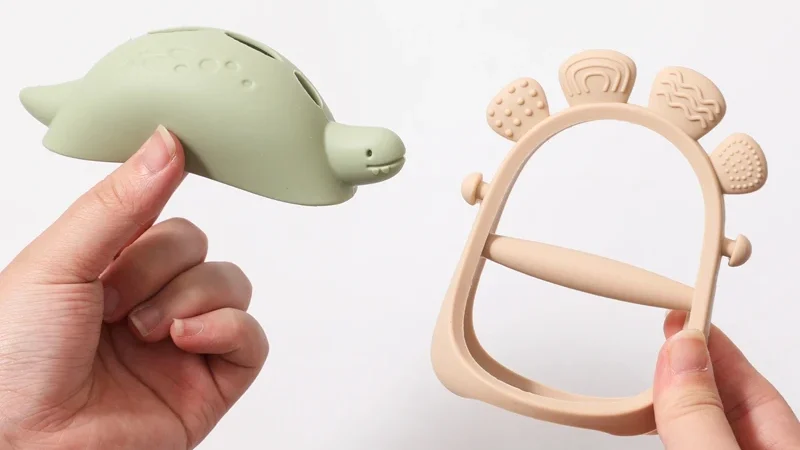
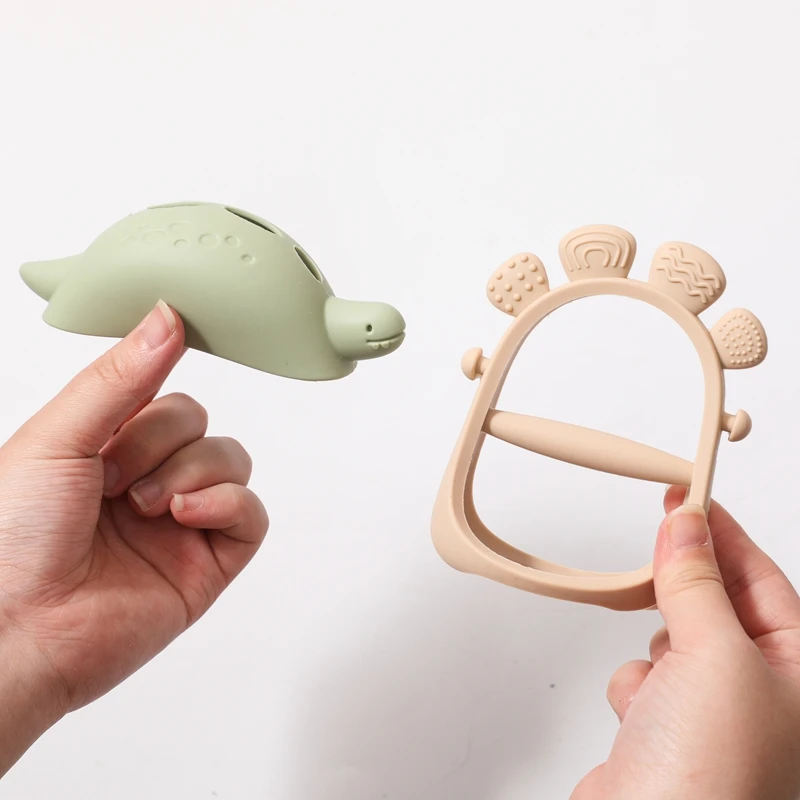
The “secret sauce” is the internal handle. The baby’s hand slides inside the dino, and their fingers naturally curl around a soft horizontal bar. This “wearable” design ensures that even if the baby opens their hand, the teether stays securely positioned over the knuckles, ready for the next “gnaw.”
Textured Dino Spikes & The Cooling Tip
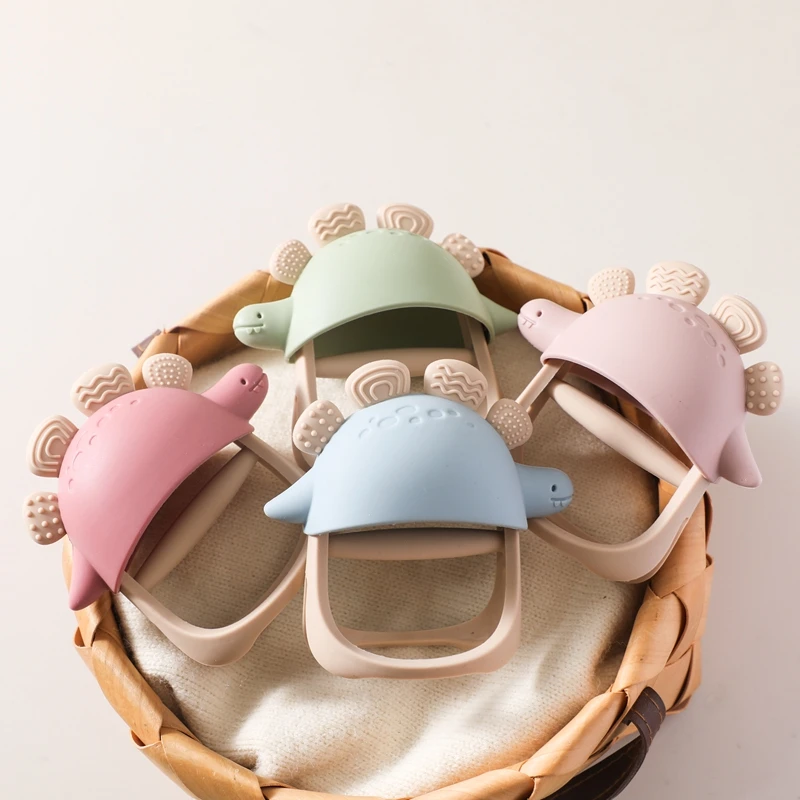
The “spikes” on the dino’s back aren’t just for aesthetics. They offer varied heights and textures to stimulate different areas of the gum line.
- Researcher’s Tip: For extra inflammation relief, place the Little Dino in the refrigerator. The high-density silicone retains the cold, which helps constrict blood vessels in the gums and numbs the pain of erupting teeth.
Benefits by Age: The Little Dino’s Growth Map

3 Months+ : Sensory Comfort
At this stage, it’s all about the hand-to-mouth reflex. The anti-drop teether provides a safe surface for the baby to explore as they discover their hands, preventing them from accidentally scratching their face with their fingernails.
6 Months+ : Targeted Pressure
As the first incisors begin to move, the baby will use the dino’s head and tail to apply direct counter-pressure to the front of the mouth.
9 Months+ : Motor Skill Mastery
As the baby gains more control, they may begin to take the teether off and put it back on themselves, using the Little Dino as both a soothing tool and a fine-motor puzzle.
Safety & Certifications
As a researcher, I never take “safe” at face value. Here is how the Little Dino checks out:
| Safety Metric | Status | Parent Benefit |
| BPA/Phthalate Free | ✅ Certified | No endocrine disruptors. |
| Construction | One-Piece | No small parts = No choking risk. |
| Material | Medical Silicone | Hypoallergenic and germ-resistant. |
| Maintenance | Dishwasher Safe | Effortless, high-heat sterilization. |
Comparison: Little Dino vs. The Field
| Feature | Little Dino | Classic Ring | Amber Necklace | Water-Filled |
| Safety | Excellent | Good | Low (Risk) | Medium |
| Anti-Drop | Yes | No | No | No |
| Hygiene | Excellent | Good | Poor | Medium |
| Gum Reach | Excellent | Moderate | None | Poor |
FAQ: Common Questions from the Nursery
Won’t it get stuck on my baby’s hand?
No. The opening is designed to be flexible and wide enough for easy removal by an adult, while the internal bar keeps it snug enough for the baby’s natural grip.
Is it freezer safe?
I recommend the refrigerator only. Extreme cold from the freezer can cause the silicone to become too hard, which may irritate the delicate mucous membranes in the mouth.
Is it safe for babies who already have teeth?
Absolutely. Medical-grade silicone is extremely durable and designed to withstand the “mashing” of new primary teeth.
How do I clean it?
It is top-rack dishwasher safe, or you can simply boil it for 2 minutes for a deep sterile clean.
What is the best age to start?
The 3-month mark is the “sweet spot” when babies begin intentional hand-to-mouth exploration.
Whispers from the Ages — Forgotten Wisdom

In my research into cross-cultural parenting, I have found that the “wearable” concept isn’t entirely new.
⚠️ AGELESS CAUTION: These practices come from traditions, often thousands of years old. They have not been validated by modern controlled scientific studies. They may carry risks of allergy, choking, toxicity, or simple ineffectiveness. They do not replace medical advice or proven treatment. Use at your own responsibility, and only after speaking with your child’s health professional.
Ancient Andean and Mediterranean cultures often bound small, smooth amulets or pieces of softened root to a baby’s wrist using silk or cotton ribbons. This served a dual purpose: it was a “protector” against discomfort and ensured the soothing object was always within reach. The Little Dino wearable baby teether is the modern, medical-grade evolution of this ancestral intuition—keeping comfort close so it never hits the dust.

The Verdict: Is the Little Dino the Best Wearable Baby Teether?
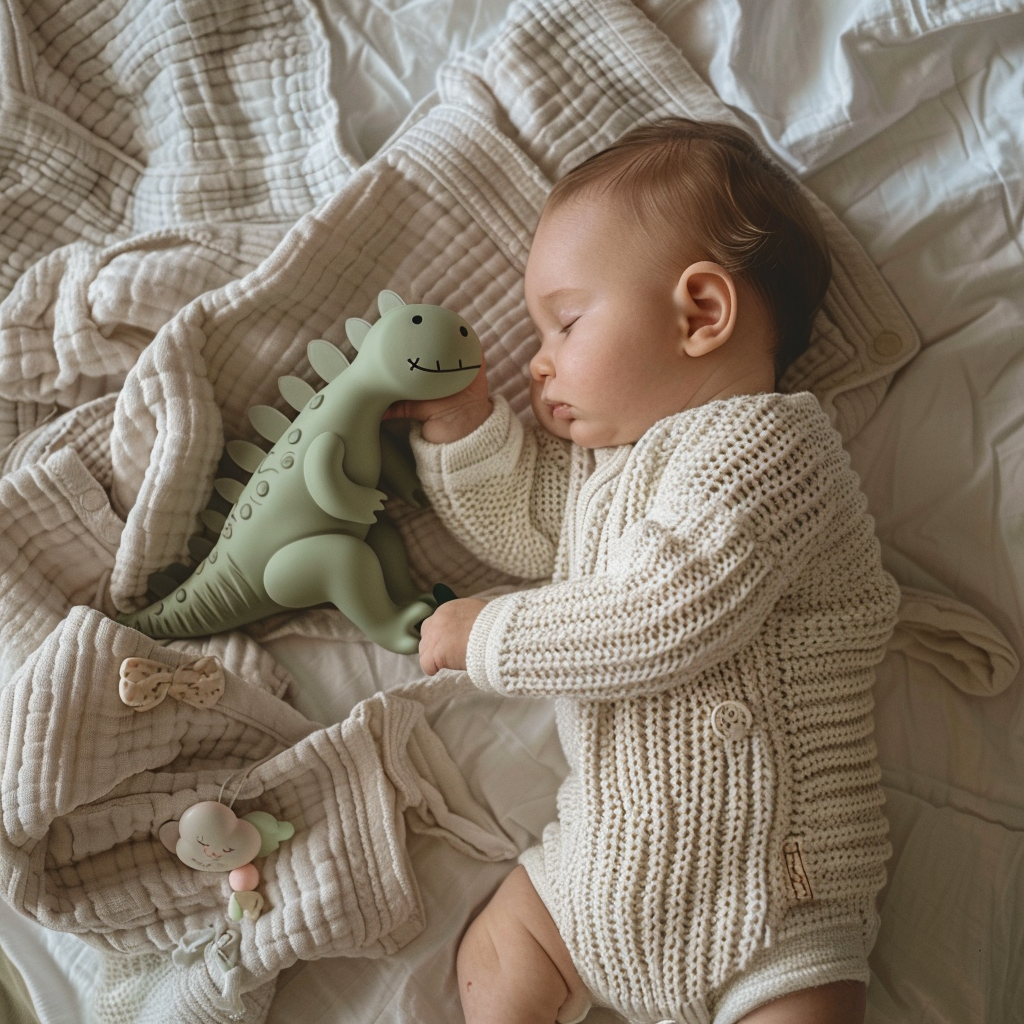
The Little Dino wearable baby teether is a rare example of a product that solves a problem for both the child and the parent. By aligning with the baby’s natural reflexes and developmental grasp, it provides consistent relief while saving you from the “pick-up” marathon.
Combined with its 100% medical-grade silicone construction, it is a safe, hygienic, and scientifically sound addition to your teething toolkit.
Ready to say goodbye to the floor-drop dance?
Looking for a multi-textured classic teether? Read our full review of the Happy Crab Silicone Crab Teether — 360° gum relief for babies 3M+.
👉 Shop the Little Dino Hand Teether Now
👉 Explore Our Full Teething Collection